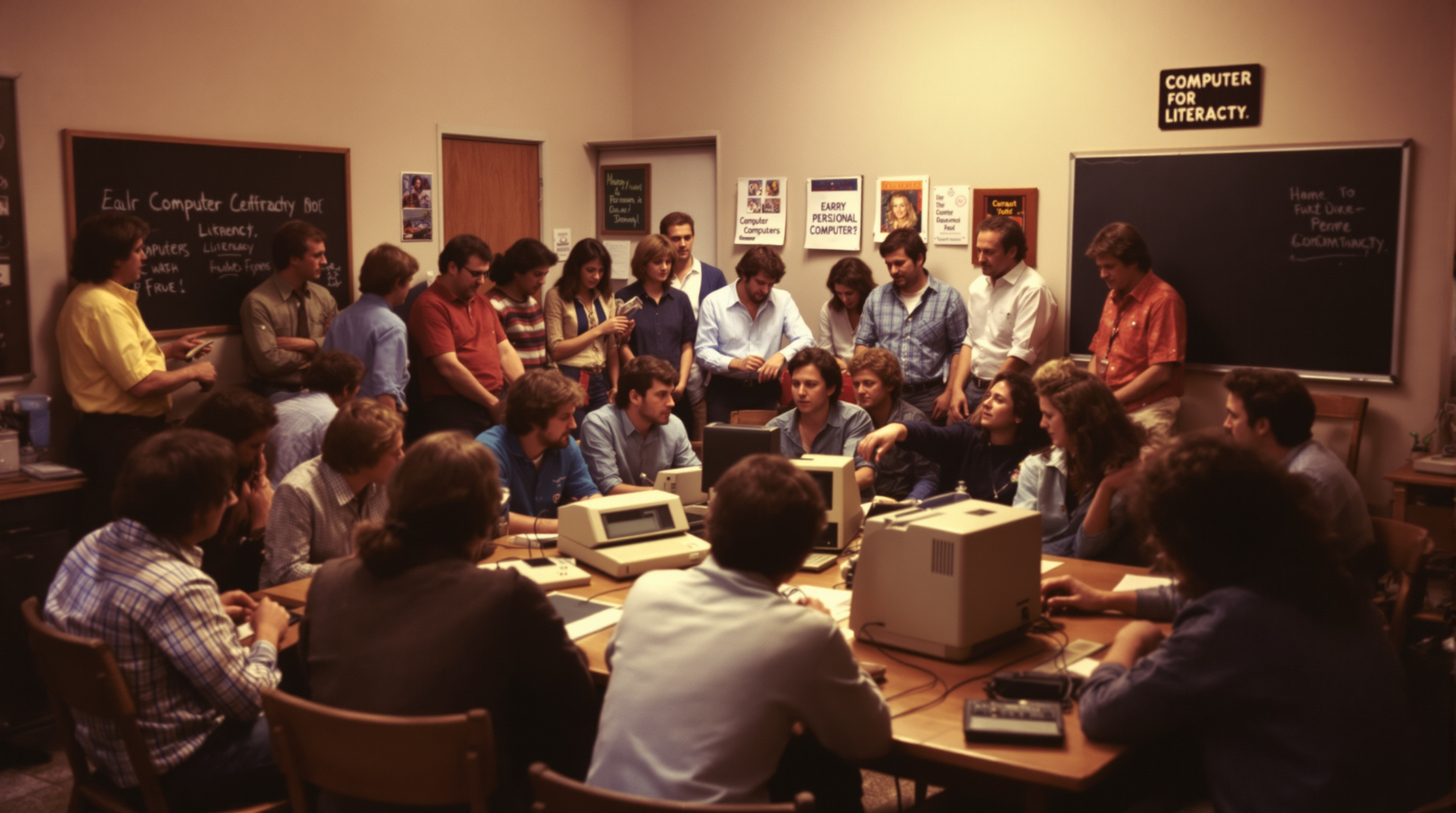
Mac User Groups, or MUGs, were one of the defining features of Apple's early ecosystem. Long before social media, forums, and YouTube tutorials existed, MUGs were where Mac users went to learn, troubleshoot, and connect with others who shared their enthusiasm for Apple's platform. Groups like SDMUG were the social infrastructure of the Mac community.
Origins of Mac User Groups
The first Mac user groups formed in 1984, almost immediately after the original Macintosh launched. Apple actively encouraged their formation, understanding that passionate communities of users were among the most powerful marketing and support tools the company could have. By the late 1980s, hundreds of MUGs existed across North America, Europe, and Australia.
Apple's recognition program for user groups formalized the relationship, providing recognized groups with software for demonstrations and raffles, advance materials, and inclusion in Apple's directory. This recognition carried real weight in the Mac community — it signaled that a group met Apple's standards for community service and organization.
What Made MUGs Different
Unlike online forums or mailing lists, MUGs provided something irreplaceable: in-person community. The ability to bring your actual Mac to a meeting, hand it to someone more experienced, and have them walk you through the problem in real time was a form of technical support that no amount of documentation could replicate.
MUGs were also incubators for Mac expertise. Many early Mac developers, designers, and IT professionals got their start through MUG presentations and connections. The communities served as informal talent networks, helping members find jobs, clients, and collaborators.
The Golden Age of MUGs (1990s–2000s)
The 1990s and early 2000s represented the peak years for Mac user groups. The internet had made it easier to organize and promote meetings, but hadn't yet replaced the in-person experience. Groups like SDMUG flourished with hundreds of active members, monthly meetings, multiple SIGs, and community service programs.
The Computer History Museum in Mountain View, California preserves documentation of this era of personal computing community. The story of MUGs like SDMUG is part of the broader history of how computing became accessible to everyday people.
The Internet's Impact on MUGs
The rise of broadband internet, followed by smartphones and social media, fundamentally changed the landscape for Mac user groups. Online forums like MacRumors grew to millions of members, YouTube tutorials provided instant visual guidance, and Apple's own support documentation improved dramatically. The need for in-person MUG meetings as a primary support resource diminished.
Many MUGs adapted by moving online, hosting webinars, or becoming more specialized. Others, like SDMUG, wound down as the internet absorbed much of their core function. But the human connections they fostered — friendships, professional relationships, mentorships — outlasted the organizations themselves.
The Enduring Value of In-Person Tech Community
Research by digital inclusion advocates like the National Digital Inclusion Alliance continues to show that in-person technology support and community learning remain crucial for many populations — older adults, people with disabilities, and communities with less internet access among them. The MUG model pioneered by groups like SDMUG continues to inform community technology programs today.
What the Model Transferred, and What Did Not
It is worth being precise about which parts of the MUG model survived the move online. Reference knowledge transferred almost completely: any question with a documented answer is now better served by a search than by waiting a month for a meeting. What did not transfer was the unstructured part — the willingness to sit with someone whose question is too vague to type into a search box, or who does not yet know the vocabulary their problem belongs to.
That gap is why in-person technology help keeps being reinvented under new names: library programs, senior centre classes, store workshops. Each rediscovers what MUGs established decades ago — for a genuine beginner, the scarce resource is not information but patience.
Finding Your Community
The spirit of Mac user groups hasn't disappeared — it's evolved. Apple Stores host Today at Apple sessions. Online communities on Reddit, Discord, and specialized forums carry on the tradition of peer support. Podcasts like Upgrade, ATP (Accidental Tech Podcast), and Mac Power Users continue the tradition of thoughtful discussion about Mac technology that SDMUG meeting Q&As once embodied.
For those who remember the SDMUG years fondly, or who wish they'd been part of it, these communities offer a window into the same spirit of shared enthusiasm and mutual support that made Mac user groups something special.